
AI Chatbots vs Human Support: What Works Better for Apps?
By Ekam | August 4, 2025
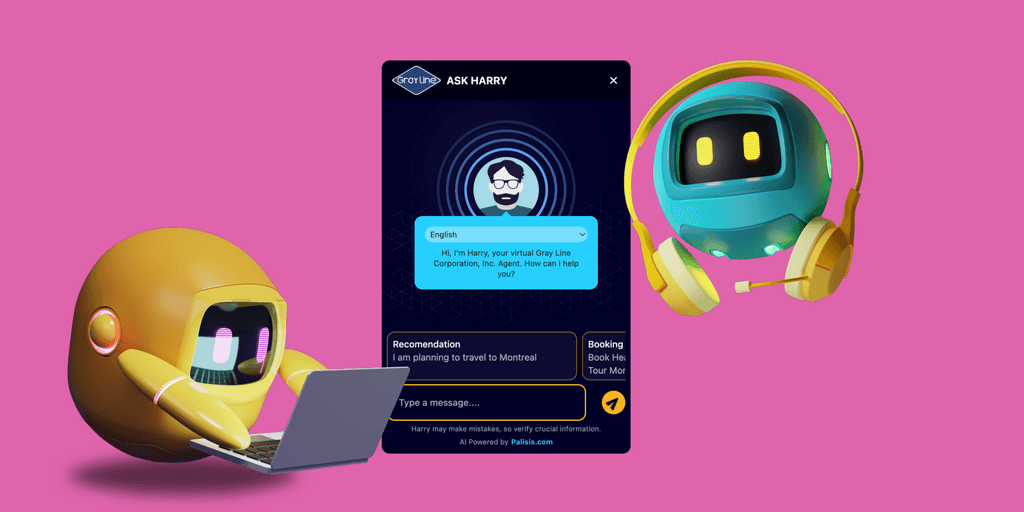
In today’s fast-paced digital world, businesses are constantly looking for smarter, faster, and more efficient ways to communicate with their users. One of the biggest decisions mobile app owners face is:
"“Should we use AI chatbots or rely on human support agents?”"
Let’s dive into a detailed, simple comparison of AI chatbots and human support to understand what works better for your app.
What Are AI Chatbots?
AI chatbots are computer programs that simulate human conversation. They can answer questions, provide solutions, and even perform tasks automatically — all without human intervention.
They are available 24/7 and can handle thousands of users at once.
What Is Human Support?
Human support involves real people answering customer queries through chat, email, or calls. These support agents can understand emotions, solve complex problems, and offer personalized responses.
Advantages of AI Chatbots
1. Instant Replies – No Waiting Time
One of the biggest benefits of AI chatbots is speed. As soon as a user types a question, the chatbot responds within seconds. There’s no need for users to wait in a queue for human support
This is especially helpful for mobile apps, where users expect quick, on-the-go answers.
2. 24/7 Availability – Even During Holidays
Unlike human agents who work fixed hours, AI chatbots work around the clock. Whether it’s midnight, a weekend, or a national holiday — the chatbot is always available to assist users.
Can AI do that automatically in the background?
3. Scalable – Can Handle 1000+ Users at Once
AI chatbots don’t get tired. They can talk to hundreds or even thousands of users at the same time without any drop in quality or speed.
This is ideal for growing apps or businesses with high traffic where scaling human teams would be expensive and time-consuming
4. Cost-Effective – Reduces the Need for a Large Support Team
Hiring, training, and managing a human support team can be costly. AI chatbots help reduce these costs by handling a large portion of customer queries automatically.
This allows companies to focus their human resources on complex or high-value interactions.
5. Great for Repetitive Queries – Like Password Resets, Order Status, FAQs
Many user queries are simple and repetitive.
“Where’s my order?”
“How do I reset my password?”
“What’s the refund policy?”
AI chatbots can easily handle these questions without human help — saving time for both users and the business.
6. Data Collection – Helps Understand User Behavior
1. Struggle with Emotional
While AI is smart, it still lacks emotional intelligence.
If a user is angry, upset, or facing a complex issue, the chatbot might not understand their tone or intent.
This can lead to frustrating experiences and make users feel unheard.
2. Limited to Pre-Defined Scripts and Training
Chatbots work based on the data and responses they’ve been trained on.
If a user asks something outside of the programmed flow, the chatbot may give an irrelevant or confusing reply.Unlike a human, it doesn’t have common sense or the ability to “think outside the box”.
Example :
Let’s say your app has a chatbot trained to handle common queries like:
* “What are your working hours?”
Now, suppose a user types:
* “Are you guys open on Sundays?”
Even though the user is just asking about working hours, the chatbot fails to recognize it because it wasn’t trained to handle that casual phrasing.
3. Can Frustrate Users When It Fails to Understand the Problem
Sometimes, users just want to talk to a real person.If the chatbot keeps giving the wrong answers or repeats the same message, users may become irritated or lose trust in your app.This is why it’s important to always offer an option to connect with human support when needed.
Advantages of Human Support
1. Empathy and Understanding – Human Agents Can Build Trust
Unlike machines, humans can feel and respond with emotions. A well-trained support agent can listen patiently, show empathy, and connect with users in a meaningful way.
This emotional connection helps in building trust and brand loyalty, especially during sensitive situations.
2. Handles Complex Issues – Ideal for Troubleshooting and Complaints
Many customer problems don’t have straightforward answers.
For example, if an app feature is not working due to a technical bug— a human agent can think critically, ask follow-up questions, and offer customized solutions.
Chatbots can get confused in such complex scenarios.
3. Flexible Responses – No Rigid Scripts or Flowcharts
Humans can adapt their tone, language, and solution style based on the situation. They’re not limited to a fixed flow or pre-defined responses.
For instance, if a user is confused, a human can simplify the explanation or give an example.
4. Better for Angry or Upset Customers
When users are frustrated or angry, a calm, polite support agent can diffuse the situation, apologize sincerely, and assure the user that their concern is being taken seriously.
This can turn a negative experience into a positive one.
1. Limited Availability – Working Hours Only1
Human agents usually work in shifts. This means support is only available during specific hours. If a user reaches out late at niht or during a holiday, they may not get help immediately — which can lead to frustration, especially in critical cases.❞
2. Slower Response Time – Users May Need to Wait
Human support may involve wait times — especially during peak hours. Users might be placed in a queue, and depending on the issue’s complexity, resolution may take longer.
3. More Costly – Hiring, Training
Building a quality human support team requires continuous recruitment, training, salaries, and performance management.
For startups or small businesses, this can be a heavy ongoing cost compared to deploying a chatbot.
4. Not Easily Scalable
If your app suddenly grows from 1,000 users to 100,000, it’s not easy to scale human support instantly.
Hiring more agents takes time, and without proper planning, the support experience can suffer — causing delays and poor customer satisfaction.
So, What Works Better for Your App?
There is no one-size-fits-all answer.
Whether you should go with AI chatbots, human support, or a mix of both depends entirely on your app’s goals, user expectations, and support complexity.
Here’s a quick breakdown to help you decide:
If your app has frequent, simple user queries → Go for AI Chatbots
Apps that get repetitive questions like “How do I reset my password?” or “Where is my order?” are ideal for AI chatbots. They can handle such queries instantly, reducing pressure on human teams and improving user experience.
If you need 24/7 support on a limited budget → Go for AI Chatbots
Startups or businesses with small support budgets can use AI chatbots to offer around-the-clock assistance without hiring a full-time team. It’s cost-effective and keeps your users happy.
If your app handles emotional or complex customer issues → Go for Human Support
In industries like healthcare, finance, or legal services, customers often need empathy and complex problem-solving. Human agents can listen, understand context, and offer personalized solutions — something chatbots often fail to do. For new apps, it’s better to have human agents who can collect real feedback, understand user pain points, and improve the overall experience. Once the app scales, automation can be added later.
If your app targets premium users → Go for Human Support
Human agents can provide the kind of attention and tailored responses that keep customers loyal and satisfied.
At Nugen IT Services, we always recommend a hybrid support model that combines:The speed and efficiency of AI chatbots, The empathy and expertise of human agents. We recommend a hybrid support system — a smart blend of AI chatbots and human agents.This ensures that your app delivers the best possible customer experience.
Real-World Use Case: E-commerce App Example
An e-commerce app uses an AI chatbot to instantly answer FAQs like order, refund status, and password reset
But when a customer complains about receiving the wrong product or requests a custom delivery arrangement, the query is smoothly handed over to a human agent who understands the concern and resolves it personally.
Result: The company saves time and costs with automation and improves customer satisfaction with human empathy.
Conclusion
In today’s fast-evolving digital landscape, delivering seamless, timely, and intelligent customer support is no longer optional — it’s essential.
AI chatbots offer unmatched speed, scalability, and cost-efficiency, making them ideal for handling routine tasks and high volumes of user queries.On the other hand, human support provides emotional intelligence, flexibility, and the critical thinking required for complex or sensitive situations.
Written by Ekam, AI chatbots are automated virtual assistants that use artificial intelligence to simulate human-like conversations, offering instant support, answers, and actions — anytime, without human involvement.